By Chris Robbins
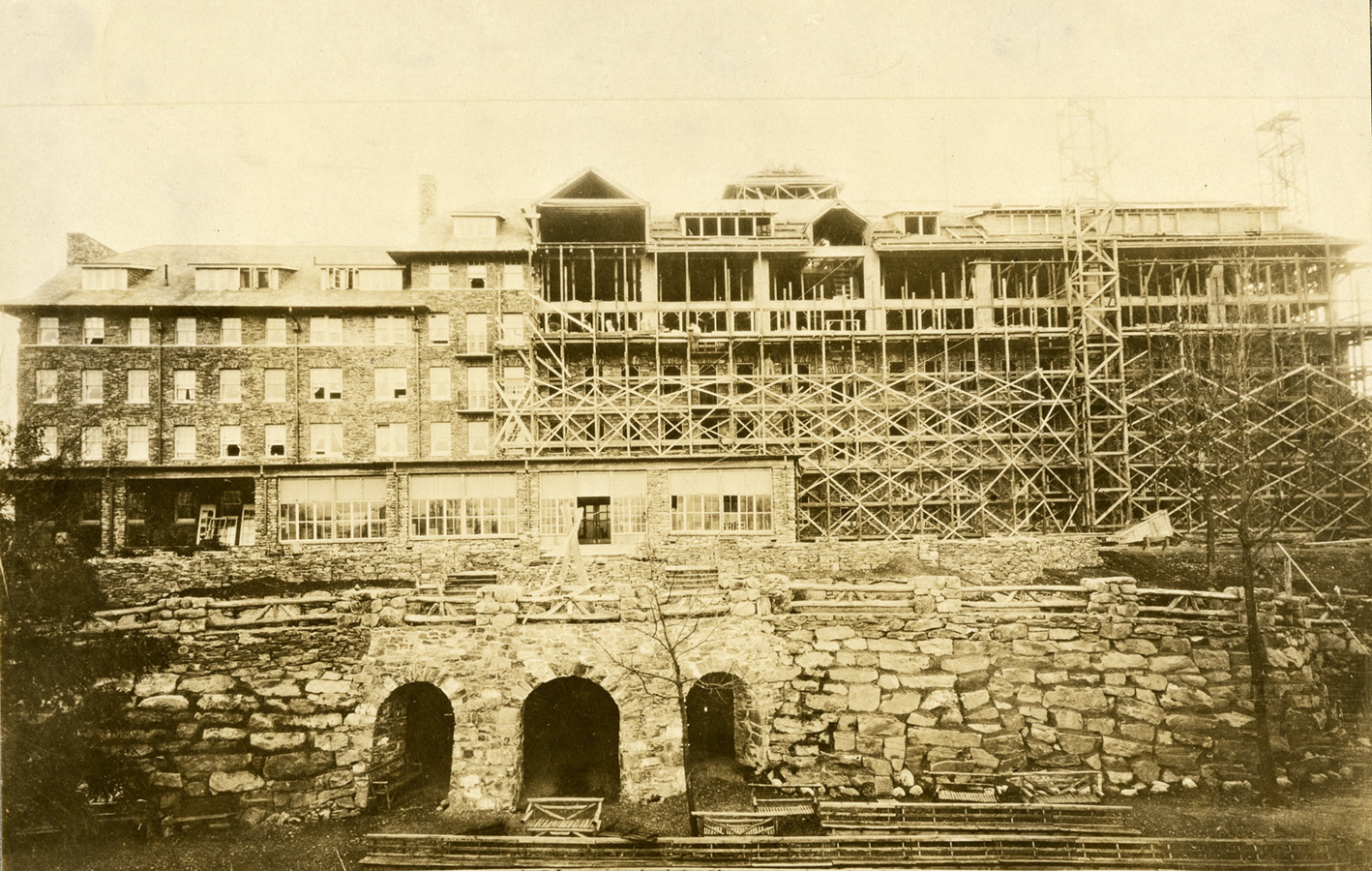 The 1923 main wing of the Buck Hill Inn was designed from the start to live in harmony with the beauty of its natural surroundings. Decoration was conservative, as you would expect from our Quaker forefathers, but for the decorative elements that were chosen, no cost was spared nor detail too small. This was evident in the decision to enlist the Olmstead Brothers for landscape design. Similar attention was paid to the artists and elements that were selected to decorate the inn. We were aware of the magnificent, hand-painted wallpaper of the main dining room. The beautifully detailed wild birds and foliage painted on site, in an Asian motif, have long been a source of inspiration to those fortunate enough to recall. Lucky for us, there was more to the story.
 Prior to the start of the inn demolition, I, along with John Styk and a group of volunteers, spent several months photographing the inn and searching for historical documents and elements that could be saved for the community. As we searched the upper floors of the main wing, I would sometimes find fragments of beautifully-crafted wallpaper buried inside walls under layers of paint. The paper seemed to be detailed floral and nature designs done in watercolor. I was never able to salvage more than a couple tiny fragments.
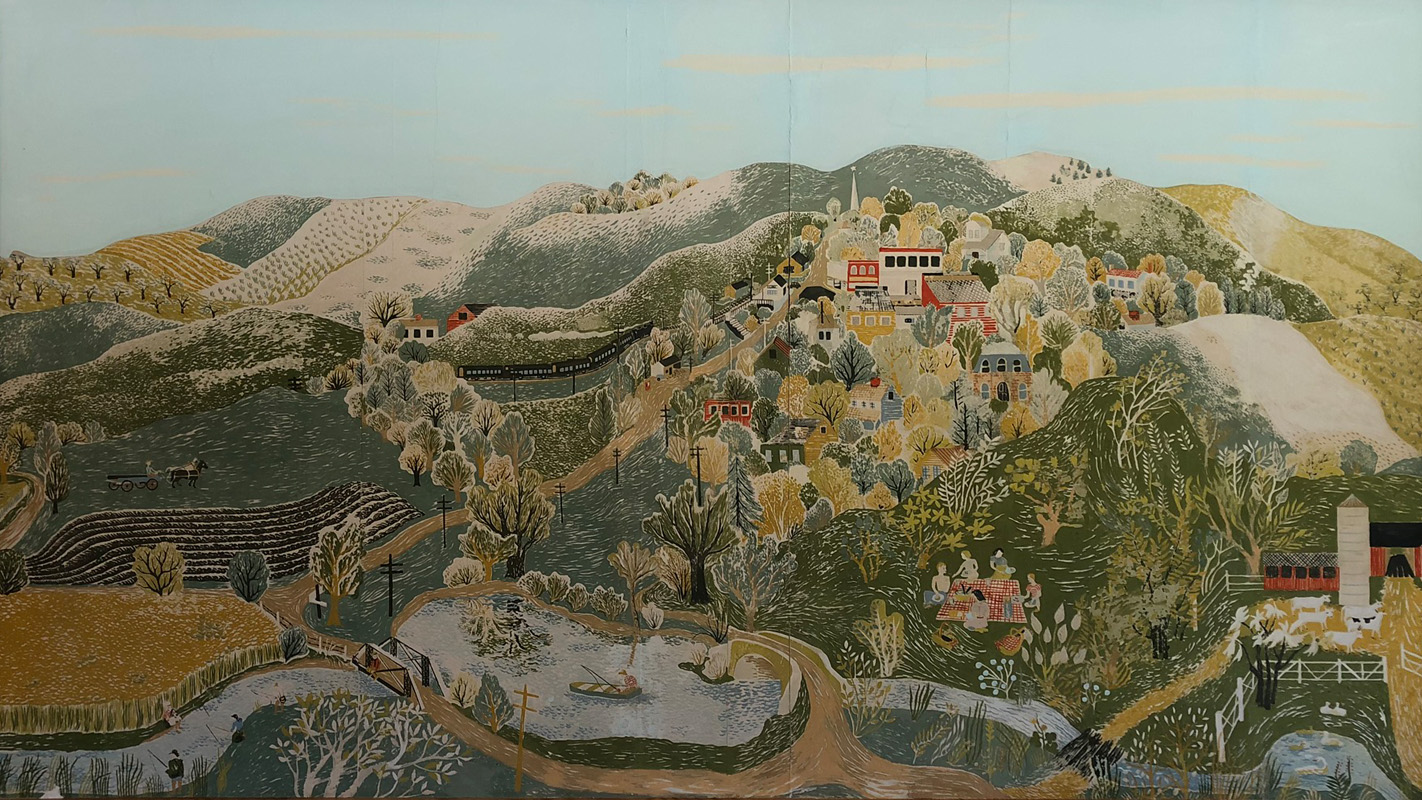
One hot afternoon, John Styk and I were on the fifth floor guest room hall of the main wing, covered in mold and sweating through our respirators. I had been there countless times before, but this time I took notice of a small detail. All of the halls had the same thin chair-rail molding, but as I looked down this hall, I noticed that the molding had been used to create two thin frames. The hallways were dark and the air was thick with dust and mold. On this floor, the walls were still covered with a hideous, unnatural 80’s-era floral wallpaper. It occurred to me that the frames must be there for a reason. I ran my knife around the inside of one of the frames and used the edge to peel back the wallpaper. There it was, a beautiful mural depicting the various landscape vignettes of the early American countryside. We had unveiled in two sections an art piece totaling more than eighteen feet in length and five feet in height.
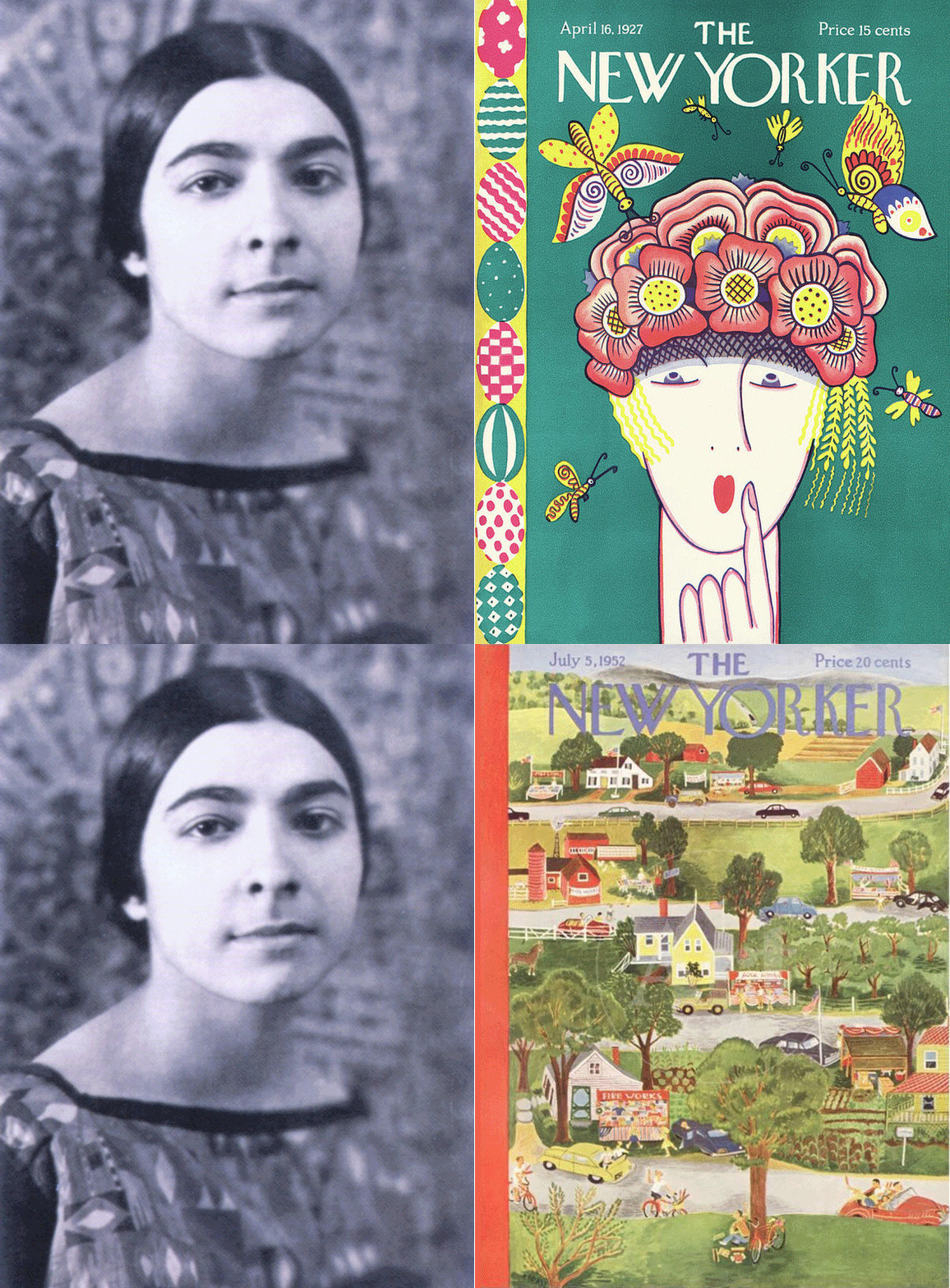 I would come to learn that the mural was created by the artist Ilonka Karasz, who studied at the Royal School of Arts and Crafts in Budapest before arriving in New York in 1913. At the age of 17, she began her artistic career in Greenwich Village. There, she established herself as an influential practitioner of modern art and design. She gained fame for her whimsical wallpaper and her 186 published covers of the New Yorker magazine. The public was enamored of her ability to depict the simple grace and beauty in everyday American life through her cityscapes, townscapes and naturescapes of the era.
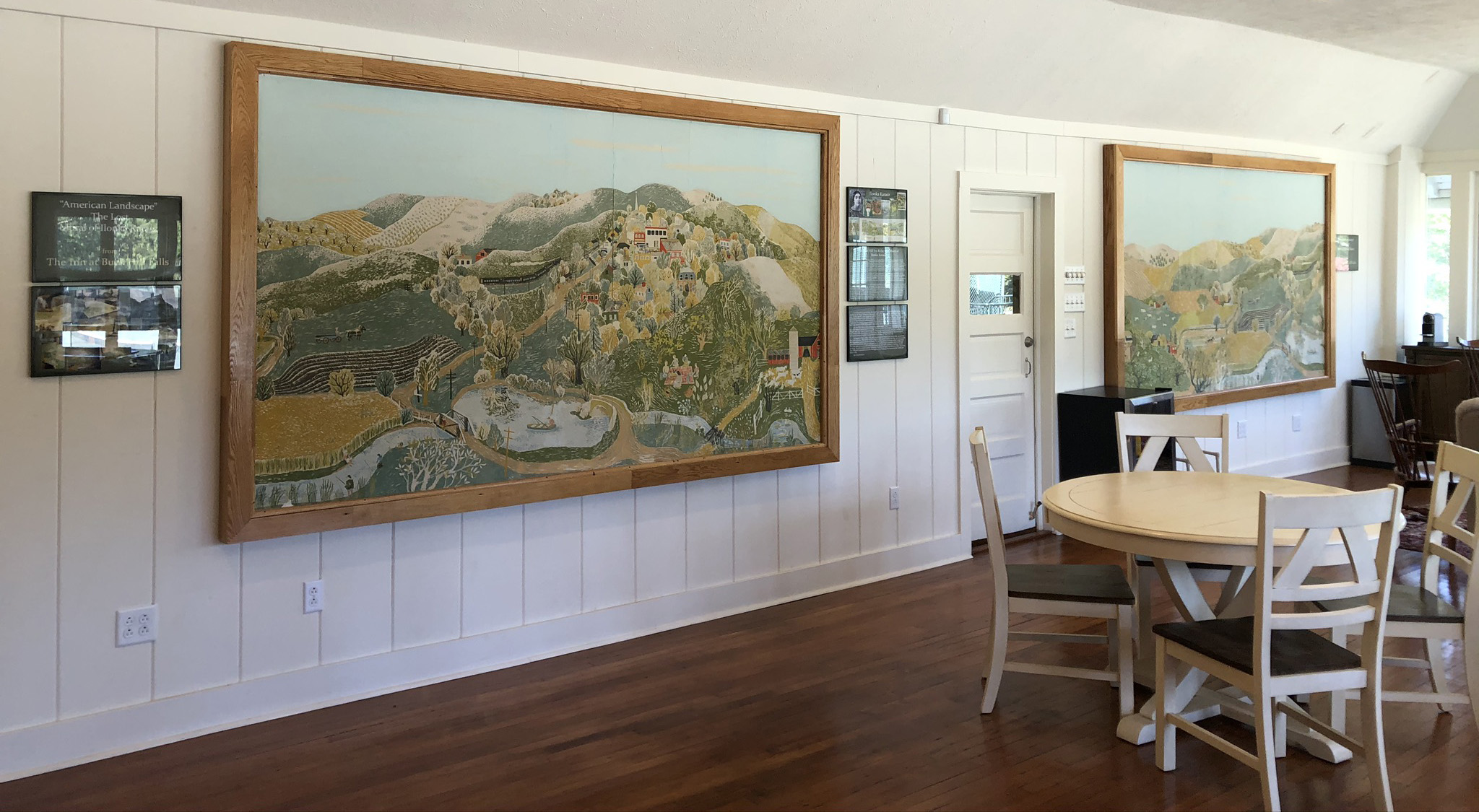
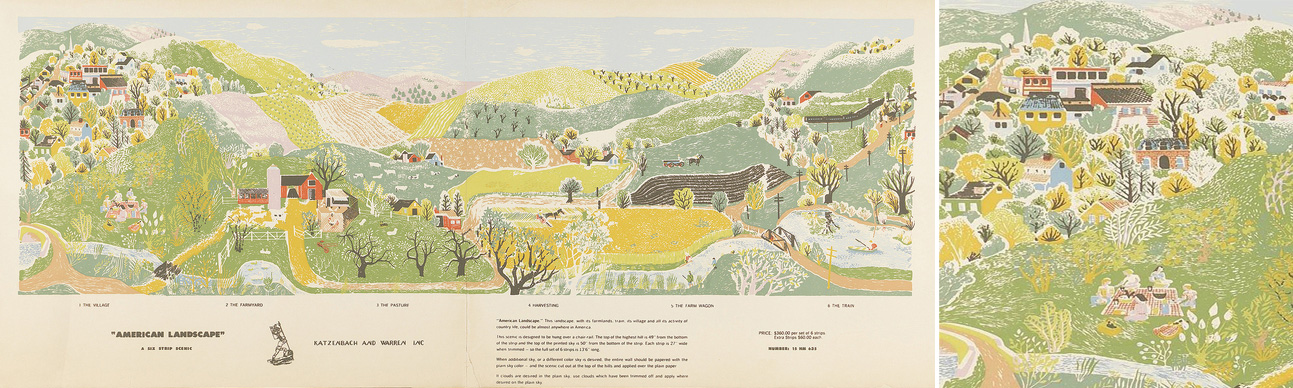
On the fifth floor, we had uncovered her mural, titled “American Landscape.” This mural is a collection of six scenes: The Village, The Farmyard, The Pasture, Harvesting, The Farm Wagon and The Train. Our mural is the only known full size original to have survived. The Smithsonian Institute has an original miniature version in their Cooper Hewitt Collection in New York City.
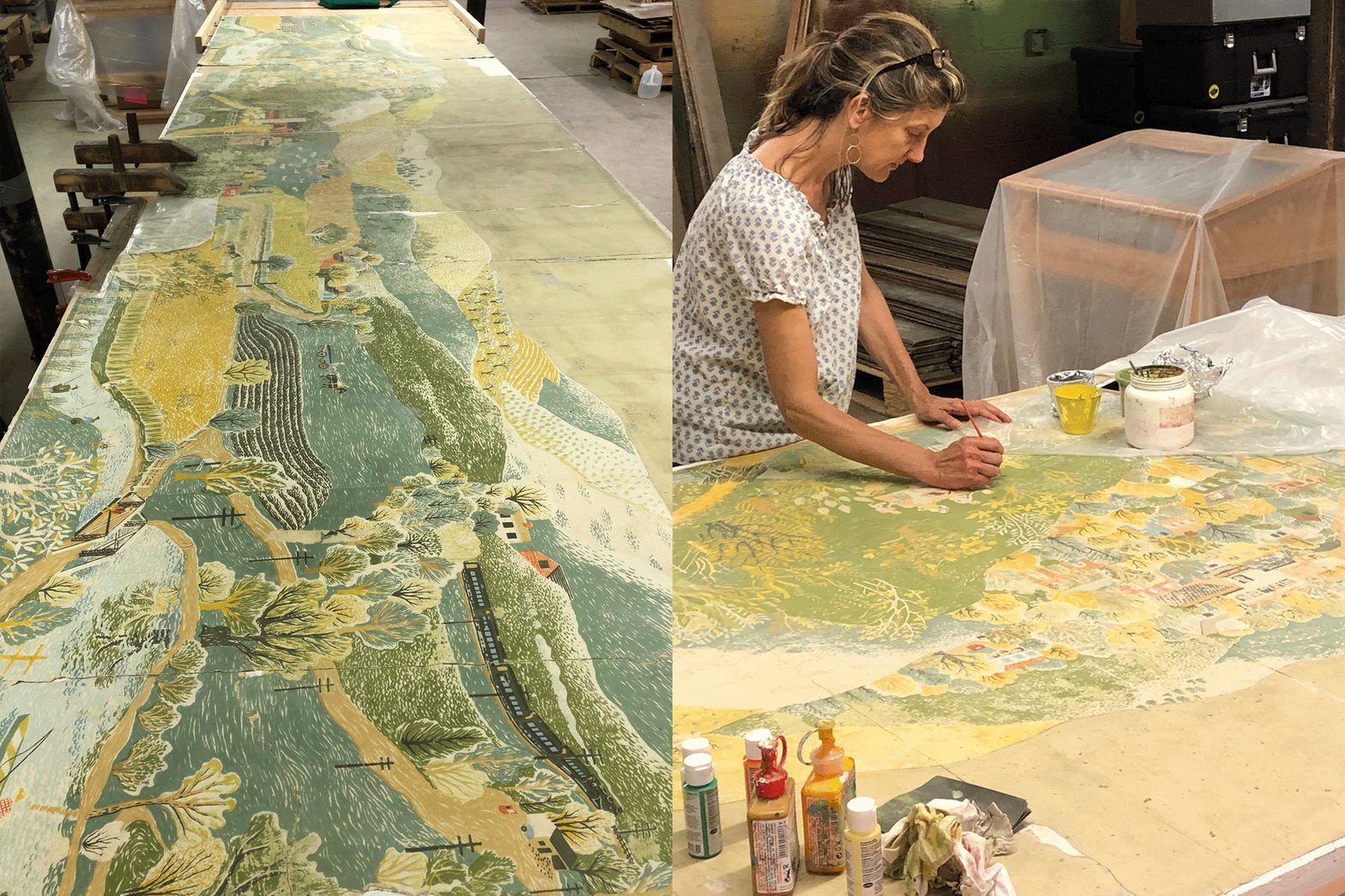
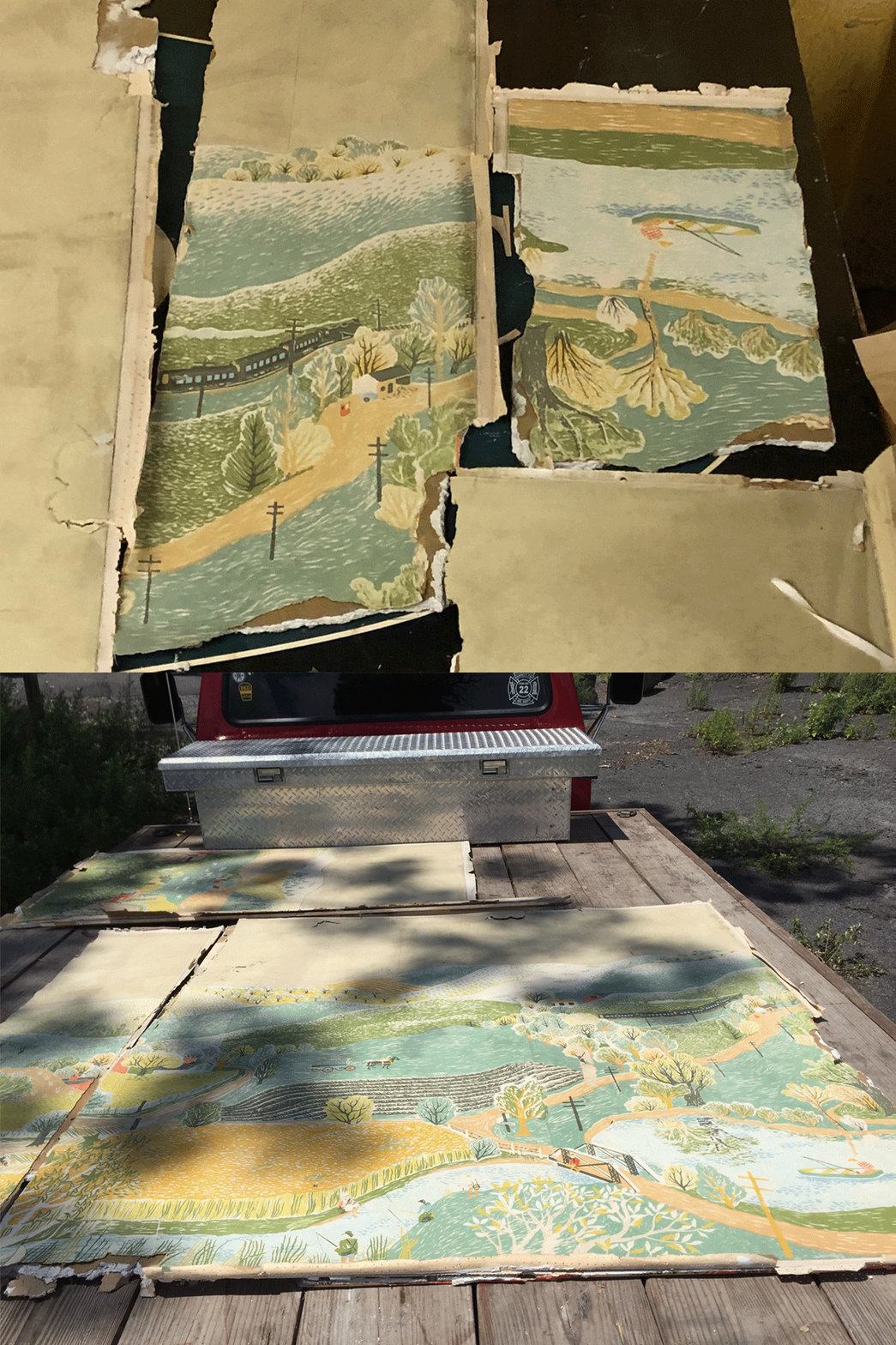 In August of 2016, John Styk and our volunteers helped me remove the mural from the wall in pieces. The trek down five flights of stairs took its toll, and by the time we were outside, the mural fragments numbered several dozen. We put the pieces in storage while I researched restoration methods. John introduced me to a skilled local craftsman, Dan Coolbaugh. Dan was able to reassemble all the fragments on a bed of plaster, creating a sturdy backing. Our own Ann Mitchell repainted all the damaged areas, bringing this monumental landscape back to life. Dan Coolbaugh created the frames from American Chestnut salvaged from the Inn Lobby. This remarkable mural is on display in the Club Room at the Tennis Tea. Please stop by and enjoy this treasure brought back from the best of times at the Buck Hill Inn.